
Menu
Field notes / Preparedness & survival
What the 90-Day Preparedness Headlines Actually Mean
By Tyler Dean Milligan / / 7 minute read
There is a big difference between a military readiness plan and an instruction telling every American household to stockpile for 90 days. Before we pass a headline around, we need to know which one we are talking about.
The military story behind the current discussion is real. The conclusion that every family has received a new federal 90-day order goes further than the sources support.
My own position is straightforward: I recommend working toward at least 90 days of household supplies. For my family, we shoot for a year of what four people need. That is our goal, and it goes beyond FEMA’s baseline guidance.
You can take preparedness seriously without turning a government planning document into a prediction of what happens next.
Where the FORTRESS America 90-day claim comes from
I traced this coverage to Fox News Digital’s October 25 report, followed by The War Zone’s October 26 coverage.
The underlying initiative is FORTRESS America. An official Army account of the September 30, 2026 announcement describes a plan to make American military installations more independent, including their own power, stronger protection, and more resilient domestic supply chains.
A newer October 30 report from Breaking Defense adds an important detail. It reports Pentagon official Dale Marks describing a mandated 90-day on-site stockpile of critical military parts, fuels, propellants, and ammunition. On power, he described 30, 60, or 90 days of independence, depending on the installation. He was not setting one completion date for every existing base.
So the actual details matter. A military stockpile requirement, a power-resilience goal, and a household emergency kit are different things. The reporting does not establish a new order for civilians to store 90 days of food and water, or prove that a particular disaster is imminent.
My takeaway is that institutions are looking hard at what happens when the systems they depend on are disrupted. I think households should ask the same practical question, without pretending our needs are identical to a military installation’s.
What FEMA has recommended for household preparedness
The broader message is familiar: keep supplies, make a plan, and be ready for interruptions.
A joint FEMA and American Red Cross booklet, Food and Water in an Emergency, revised in May 2006, advised considering a two-week supply of food and water. It also listed a three-day supply in a portable disaster kit. Those are different planning needs within the same publication.
That advice was already in print twenty years ago. It supports saying this principle is nothing new. It does not support saying FEMA has spent twenty years telling every household to store 90 days.
Current CDC water guidance also starts smaller: at least one gallon per person per day for three days, with a two-week supply if possible.
I want to be precise about that because preparedness loses credibility when we exaggerate the evidence. I can recommend a larger reserve and explain why, while accurately describing what an agency actually said.
Why I recommend a 90-day household reserve
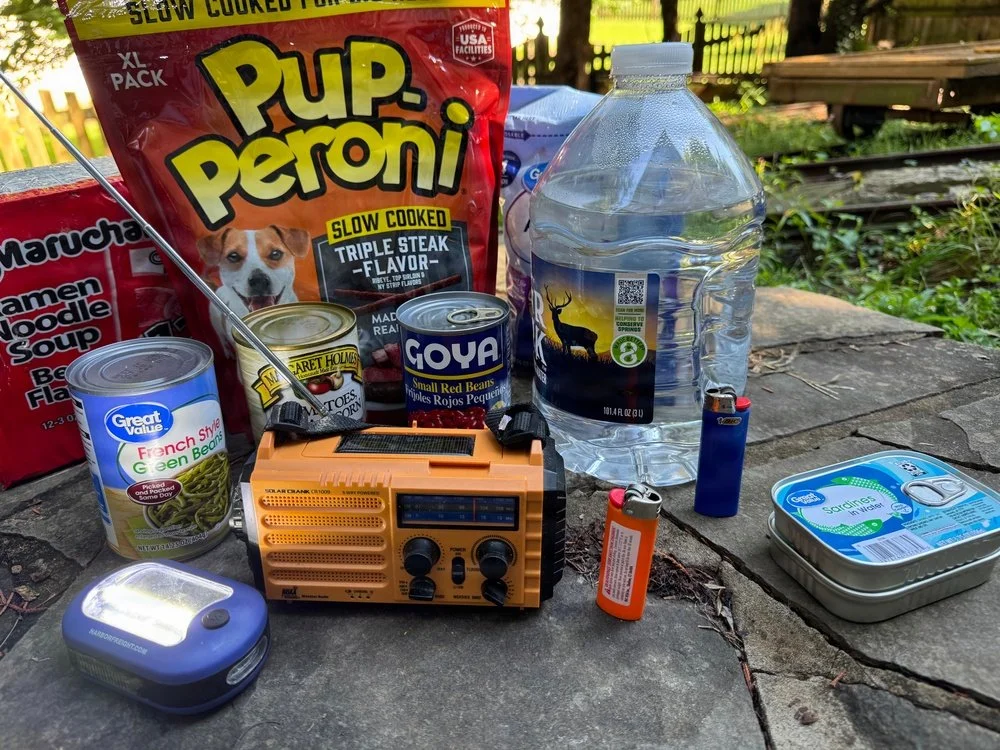
The appearance of U.S. Department of War (DoW) visual information does not imply or constitute DoW endorsement.
I want more room to respond if a disruption lasts longer than expected. I would rather have time to assess the situation than be forced into an immediate shopping trip because we have almost nothing left.
Ninety days is my recommended minimum goal for a household reserve. Our family’s longer-term aim is one year for four people. Those targets reflect how much independence I want to work toward. They are not guarantees of safety, and they do not mean everyone should spend the same amount or buy the same things.
The right plan has to account for your household, your space, your budget, and the problems you could realistically face. A shelf full of supplies is only useful if the people depending on it can actually use what is there.
If you currently have very little, do not let a one-year goal discourage you. Start where you are and make measurable progress. Taking care of the next few days is worthwhile even while you work toward months.
Emergency water storage for a family of four
Water shows how quickly a long-term goal becomes a real planning problem.
At one gallon per person per day, four people would need 12 gallons for three days, 56 for two weeks, and 360 for 90 days. Extending that same arithmetic across 365 days gives 1,460 gallons.
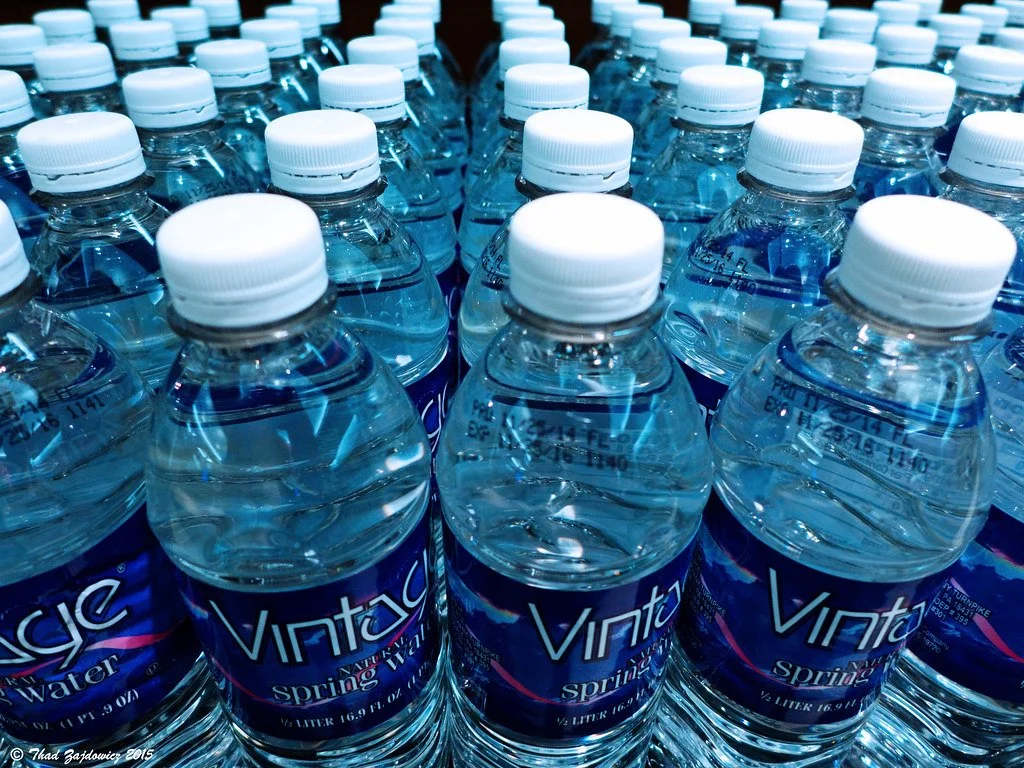
Those longer totals are calculations, not CDC recommendations for a 90-day or one-year stockpile. They also do not represent normal household water use. CDC’s emergency baseline covers drinking and other basic uses; heat, illness, pregnancy, and pets can increase requirements.
That is why a long-duration plan needs both stored safe water and a realistic way to obtain more if necessary. You have to consider whether a source will remain accessible, how you will transport the water, and how you will know it is safe. A filter alone does not answer all of those questions.
For home-filled containers, CDC recommends suitable food-grade water storage, a cool location away from sunlight and chemicals, and replacing the water every six months. Storage has to be maintained.
Food storage and everyday essentials
With food, I would start by looking at what the household actually eats and what can be prepared when the usual utilities are unavailable.
Count usable meals and adequate calories, rather than trusting a large serving count on a package. Consider allergies, dietary needs, and how much water or fuel preparation requires. Include foods that can be eaten without cooking, and rotate the supply so you are using and replacing it.
Then walk through an ordinary day and ask what else you depend on. Think about hygiene and sanitation, lighting, communication, warmth, first aid, and the needs of children or pets. For prescription medicines or medical equipment, work with the relevant clinician, pharmacist, or supplier on a safe continuity plan. Do not improvise medication changes to create a reserve.
I also want people to think about where their supplies are stored and how they would leave if staying home became unsafe. A large home stockpile does not replace an evacuation plan or a portable kit.
Build your emergency supplies in stages
Here is the approach I recommend: get a basic several-day kit together, expand toward two weeks, then build a month and work toward 90 days. Beyond that, decide what a longer reserve would require for your household.
You do not need to buy everything at once. Add useful items within your budget, keep an inventory, and replace what you use. Check whether the plan works before adding more equipment to it.
Try preparing a meal from the shelf-stable supplies. Locate the lights and batteries in the dark. Make sure another person in the household knows where things are. Check the water plan against the actual number of people and animals relying on it. Keep medical support and essential utilities operating during any practice.
A plan that depends on one person remembering everything has an obvious weak point. Share the responsibility, and build relationships with people you can help and who can help you.
Turn the preparedness headline into action
I do not need a frightening headline to believe that looking after my family is my responsibility.
The military reporting is worth understanding accurately. The longstanding household preparedness advice is worth acting on. My recommendation is to build beyond the initial kit toward at least 90 days, steadily and realistically, while our own family works toward a year for four people.
Take stock of what you actually have. Identify the first gap you can afford to close. Start there.
Life happens. Your response is your responsibility.